A small water leak can seem harmless once the floor is dry and the plumbing is fixed. The problem is that mold does not need a flooded room to get started. A damp wall, wet cabinet base, or hidden moisture behind trim can be enough if the area stays wet for too long.
That is why it helps to slow down and check the room carefully after any leak. You do not have to panic, but you should know what to look for and when it is time to call a mold removal team.
Start With The Area Closest To The Leak
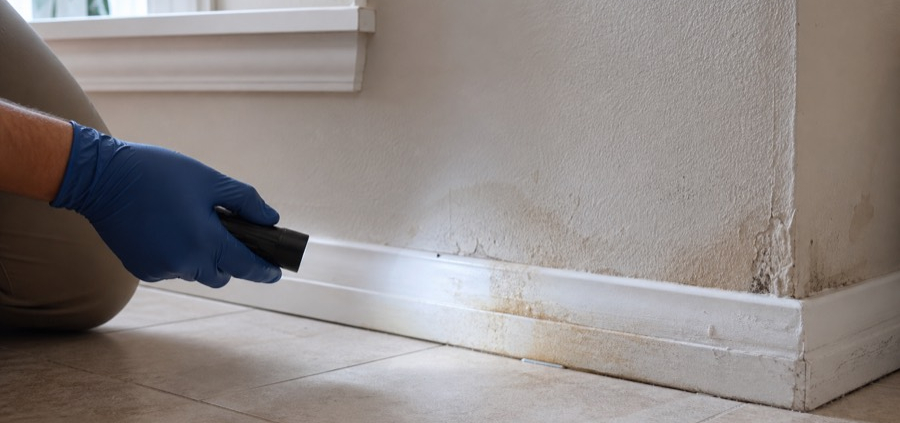
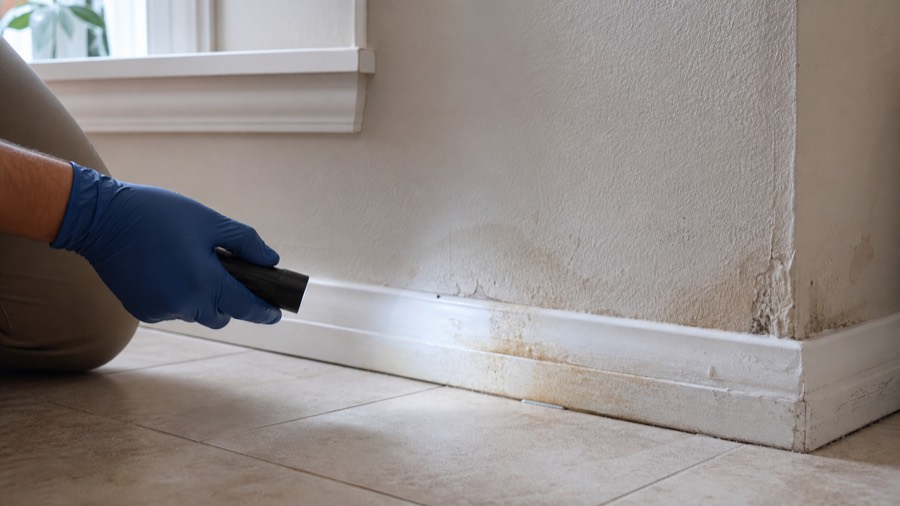
Begin where the water first appeared. Look at the baseboards, lower walls, cabinet floors, carpet edges, and nearby corners. Mold often starts in places that stay damp longer than the open floor. If the leak came from a sink, check the back of the cabinet and the wall behind the plumbing. If it came from a water heater, washing machine, roof, or air conditioner, check the surfaces around and below that area.
Water can also travel. A stain on one wall may have started several feet away, especially if the leak came from above. Follow the trail of discoloration, swelling, soft drywall, peeling paint, or warped trim.
Use Your Eyes And Your Nose
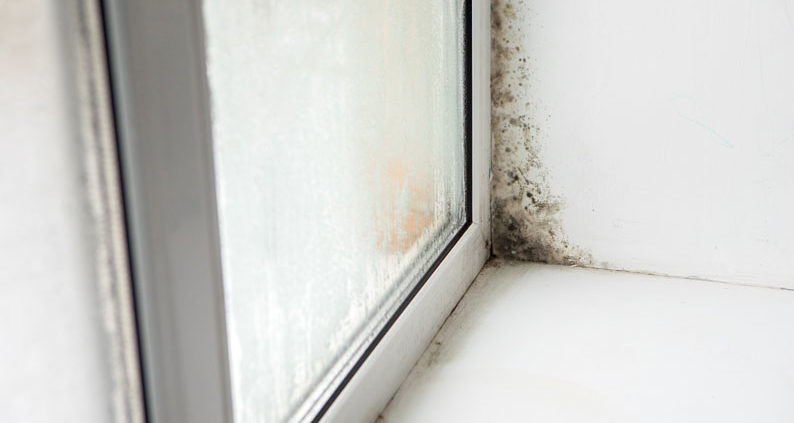
Visible mold is usually the easiest warning sign, but it is not the only one. Watch for small dark spots, fuzzy patches, green or black staining, or areas that look dusty even after cleaning. Some mold can look like dirt at first, especially along grout lines, window frames, or baseboards.
A musty smell is another clue. If a room smells damp after it has been cleaned and dried, moisture may still be trapped somewhere. That smell is worth taking seriously, especially in closets, cabinets, bathrooms, laundry rooms, and rooms with poor airflow.
Check For Materials That Stayed Wet
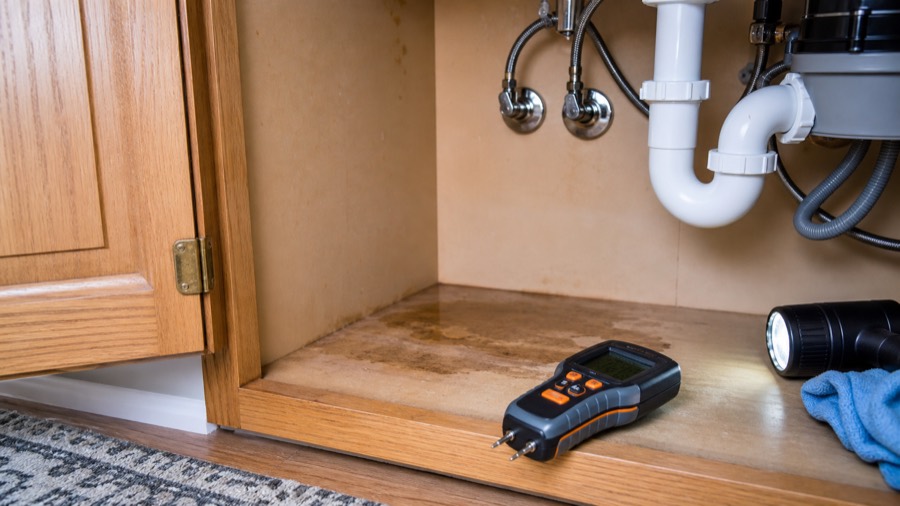
Some materials dry quickly on the surface but hold moisture underneath. Carpet padding, drywall, insulation, wood cabinets, and particle board can stay damp longer than homeowners expect. If any of these materials were wet for more than a day or two, they deserve a closer look.
Press gently on drywall or baseboards near the leak. If the surface feels soft, swollen, crumbly, or separates from the wall, there may be hidden damage. Cabinets may show bubbling, staining, or a sour smell inside. Carpet may feel dry on top while the padding underneath is still wet.
Do Not Rely On Bleach Alone
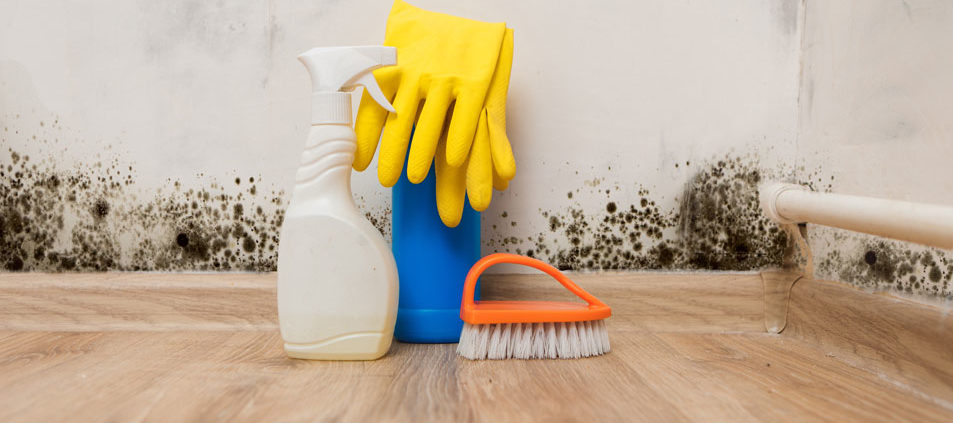
Bleach is often the first thing people reach for, but it is not a full solution for every mold problem. Cleaning a small surface spot may make it look better for a while, but it will not fix damp drywall, wet insulation, or moisture behind a wall. If the water source is not fixed and the area is not fully dry, the mold can come back.
For small, easy-to-reach spots on hard surfaces, cleaning may be enough. For larger areas, repeated growth, or anything inside walls or cabinets, professional inspection is the safer move.
When To Call A Mold Removal Team
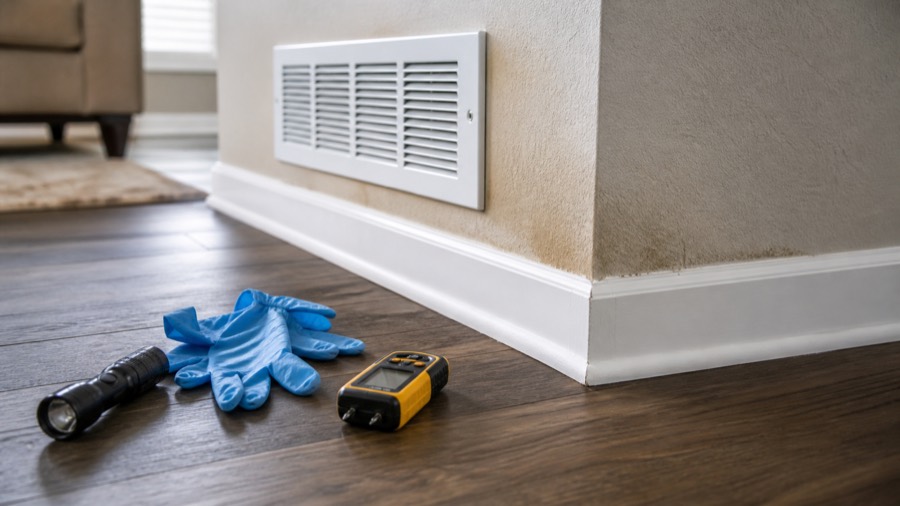
Call for help if the mold covers more than a small area, keeps returning after cleaning, appears after a major leak, or is growing on drywall, carpet, insulation, or wood. You should also get help if you can smell mold but cannot find the source.
A mold removal team can look for moisture, find the source of the problem, and remove affected material the right way. That matters because mold removal is not only about wiping away spots. It is about drying the area, removing what cannot be saved, and preventing the same problem from starting again.
A Simple Rule After Any Leak
If something got wet, make sure it is truly dry. Keep air moving, remove soaked materials when needed, and check the same area again a few days later. Mold problems are easier to handle early, before they spread behind walls or into other parts of the home.
If you are not sure what you are seeing, Texas Mold Removals can inspect the area and help you decide the next step.